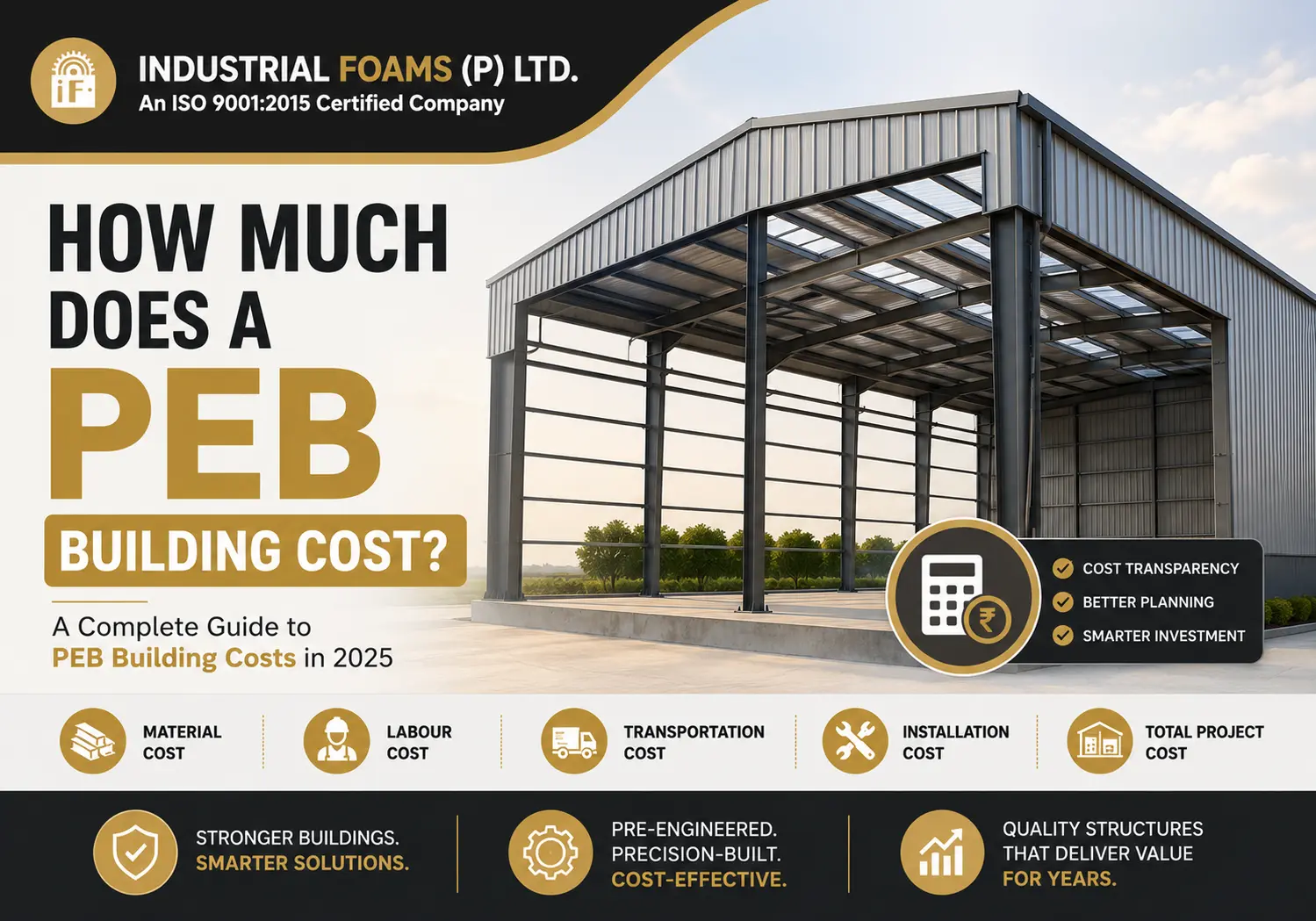
In industrial construction, pricing discussions are rarely as simple as cost-per-square-foot assumptions. With PEB Buildings, the final quotation depends on a layered combination of engineering requirements, steel configuration, fabrication precision, logistics, and long-term operational expectations.
This is one reason why buyers comparing two quotations for seemingly similar structures often encounter major differences in pricing logic.
For businesses planning warehouses, manufacturing units, logistics hubs, cold storage facilities, or commercial utility structures, understanding how PEB Buildings are priced can reduce procurement risk significantly before requesting a detailed quotation.
Industrial Pricing Overview
The dominant search intent behind “PEB Buildings cost” is usually mid-commercial investigation rather than direct purchase intent. Most buyers are trying to understand:
- Why quotations vary widely
- Which factors influence pricing most
- How customization affects project budgets
- Whether lower pricing compromises structural reliability
- What should be included in a professional quotation
Unlike commodity products, PEB Buildings are engineering-driven structures. Pricing is therefore largely factor-based rather than fixed-rate based.
In many industrial projects, the real cost difference emerges not from the visible structure itself, but from hidden engineering variables such as wind-load calculations, steel section optimization, fabrication tolerances, and foundation compatibility.
Key Factors Influencing Pricing
Several interconnected elements influence the overall cost structure of PEB Buildings.
1. Structural Steel Weight
Steel consumption remains one of the largest pricing variables.
The total steel tonnage changes depending on:
- Span width
- Building height
- Roof slope
- Bay spacing
- Crane load requirements
- Wind and seismic design standards
A structure designed for heavy industrial operations naturally requires different reinforcement compared to a light storage shed.
2. Building Dimensions
Larger clear spans often require more sophisticated engineering.
For example:
- Wider column-free spaces increase structural complexity
- Taller buildings may require additional bracing
- Multi-bay layouts affect fabrication detailing
The geometry of the structure influences fabrication efficiency directly.
3. Roofing & Cladding Selection
Cladding systems contribute substantially to pricing variation.
Factors include:
- Sheet thickness
- Coating quality
- Insulation requirements
- Corrosion resistance
- Acoustic performance
- Thermal efficiency
Industrial environments exposed to chemicals, moisture, or coastal conditions often require higher-grade protective finishes.
4. Wind & Seismic Load Requirements
Projects located in different Indian regions follow varying structural loading standards.
A facility in a high-wind or seismic zone requires:
- Heavier framing
- Additional bracing systems
- Stronger connection designs
These engineering adaptations affect both material usage and fabrication effort.
5. Foundation Coordination
Although foundations are usually handled separately, their compatibility with the steel structure impacts project economics.
Poor coordination between civil and structural planning can increase:
- Anchor alignment corrections
- Installation delays
- Site modifications
This becomes particularly important in fast-track industrial projects.
Material & Specification Impact
One of the most misunderstood aspects of PEB Buildings pricing is the assumption that all steel structures use identical materials.
In practice, material specifications vary considerably.
Steel Grade Selection
Different grades influence:
- Strength-to-weight ratio
- Durability
- Weldability
- Structural efficiency
Higher-grade steel may reduce total weight in some cases, but fabrication requirements can become more specialized.
Surface Protection Systems
Protective treatments affect lifecycle performance.
Common considerations include:
- Primer systems
- Galvanization
- Corrosion-resistant coatings
- High-humidity protection
Facilities operating in aggressive industrial environments often prioritize lifecycle durability over lower upfront cost.
Insulation Requirements
Temperature-controlled operations such as food processing, pharmaceutical storage, or manufacturing units may require insulated roofing and wall systems.
These influences:
- Material layers
- Panel systems
- Installation complexity
- Structural load calculations
For businesses evaluating different structural configurations, reviewing technically engineered solutions such as these pre-engineered building systems can help clarify how specification choices affect long-term performance.
Production & Process Variables
Fabrication methodology also influences pricing outcomes.
Not all manufacturing facilities operate with the same production capabilities.
CNC Fabrication Precision
Advanced fabrication setups typically improve:
- Hole alignment accuracy
- Weld consistency
- Assembly speed
- Structural fitment
However, precision manufacturing environments involve higher operational investments.
Automation & Production Efficiency
Modern facilities may use:
- Automated welding systems
- Plasma cutting lines
- Roll-forming systems
- Digital design integration
These processes can reduce installation inefficiencies while improving repeatability.
In many cases, buyers focusing only on initial pricing overlook the hidden savings created during erection and commissioning.
Quality Inspection & Testing
Industrial-grade structures often undergo:
- Weld inspections
- Material traceability checks
- Dimensional verification
- Coating thickness testing
Testing requirements increase depending on project complexity and compliance expectations.
MOQ & Volume Economics
Volume plays a major role in pricing efficiency.
Bulk Production Advantage
Larger projects often benefit from:
- Better steel procurement efficiency
- Lower per-unit fabrication setup cost
- Optimized logistics utilization
- Faster production sequencing
For example, a multi-building industrial campus usually achieves better cost efficiency compared to isolated smaller projects.
Small Batch Challenges
Custom low-volume structures may involve:
- Repeated setup adjustments
- Lower material optimization
- Higher design allocation per unit
This is why smaller customized projects sometimes appear disproportionately expensive compared to larger industrial developments.
Customization vs Standard Production
Customization significantly changes pricing dynamics.
Standardized Structures
These are generally more economical because they use:
- Repetitive fabrication patterns
- Standard connection systems
- Faster production cycles
- Predictable installation methods
Customized Industrial Structures
Custom projects may involve:
- Crane systems
- Mezzanine floors
- Skylights
- Ventilation systems
- Heavy equipment integration
- Specialized clearances
Each addition affects engineering coordination and fabrication detailing.
A manufacturing facility designed around automated production lines will rarely follow the same structural logic as a standard warehouse.
Logistics & Supply Chain Influence
Freight costs are increasingly relevant in steel-intensive projects.
PEB Buildings involve transportation of:
- Primary steel members
- Secondary framing
- Roofing sheets
- Fasteners
- Accessories
Distance from fabrication base to installation site affects:
- Freight availability
- Handling costs
- Transit timelines
- Risk of material damage
With manufacturing operations based in Delhi and supply capability extending across India, companies such as Industrial Foams often need to align logistics planning carefully with regional delivery schedules and site readiness conditions.
Businesses managing multi-location projects sometimes evaluate regional execution capability through operational coverage references such as this project presence network before finalizing procurement planning.
How Quotations Are Structured
A professional quotation for PEB Buildings is usually structured around multiple cost layers rather than a single consolidated number.
Typical quotation components include:
- Structural steel framework
- Secondary members
- Roofing and cladding
- Fasteners and accessories
- Fabrication cost
- Surface treatment
- Transportation
- Erection scope
- Taxes and compliance
Why Two Quotes Can Differ Substantially
Even when dimensions appear similar, quotations may differ because of:
- Steel grade variation
- Design optimization
- Coating specification
- Fabrication precision
- Installation scope
- Load-bearing requirements
This is why evaluating quotations line-by-line is often more useful than comparing only the final project value.
What Mainly Affects PEB Building Cost?
PEB Buildings pricing is mainly influenced by structural steel weight, building dimensions, roofing specifications, wind-load requirements, fabrication precision, insulation needs, customization level, transportation distance, and project volume. Since each industrial structure is engineered differently, quotations are usually specification-based rather than fixed-rate based.
Price vs Quality vs Lifecycle Value
Lower initial pricing does not always translate into lower project cost over time.
In industrial construction, lifecycle performance matters considerably.
Lower-Cost Structures May Lead To:
- Higher maintenance frequency
- Faster corrosion exposure
- Increased roofing issues
- Installation inefficiencies
- Structural modification costs later
Higher-Quality Engineering Often Improves:
- Structural longevity
- Operational reliability
- Energy efficiency
- Future expansion capability
- Reduced downtime
This becomes particularly relevant for facilities operating continuously under demanding environmental conditions.
A warehouse operating for twenty years evaluates value differently from a short-term temporary structure.
Scenario Comparison: Bulk vs Custom Projects
Scenario 1: Bulk Industrial Warehouse Development
A logistics operator developing multiple standardized warehouse units may benefit from:
- Repeated design efficiency
- Lower fabrication complexity
- Better material utilization
- Streamlined transportation planning
The result is often better overall cost optimization.
Scenario 2: Specialized Manufacturing Facility
A customized production plant requiring:
- Heavy crane support
- Process ventilation
- Equipment integration
- Specialized height clearance
typically involves more engineering coordination and fabrication detailing.
Although the structure may appear similar externally, the underlying design complexity changes the pricing framework considerably.
How to Evaluate a Manufacturer Quote
Before finalizing a supplier, buyers should evaluate more than headline pricing.
Important Evaluation Points
Structural Scope Clarity
Check whether the quote clearly defines:
- Steel sections
- Coating systems
- Cladding specifications
- Load assumptions
Engineering Transparency
Reliable quotations usually explain:
- Design standards
- Wind-load criteria
- Material grades
- Structural inclusions
Fabrication Capability
Review whether the manufacturer operates:
- Precision fabrication systems
- Quality inspection processes
- Structured production workflows
Logistics Planning
Clarify:
- Freight responsibility
- Transit insurance
- Delivery sequencing
- Site unloading expectations
Erection Scope
Some quotations exclude:
- Installation
- Civil coordination
- Crane arrangements
- Site supervision
Understanding exclusions early prevents project delays later.
Are PEB Buildings Cheaper Than Conventional Construction?
PEB Buildings can improve construction efficiency because fabrication is completed in controlled manufacturing environments before site installation. However, actual cost advantage depends on project scale, customization level, structural requirements, and lifecycle expectations rather than only upfront material pricing.
FAQs
1. What is the biggest cost factor in PEB Buildings?
Structural steel consumption is usually one of the largest pricing factors. Span width, load requirements, and building height significantly influence total steel usage.
2. Why do PEB Building quotations vary between manufacturers?
Quotations differ due to engineering design methods, material grades, fabrication precision, coating systems, logistics planning, and included project scope.
3. Does customization increase PEB Building cost?
Yes. Features such as cranes, mezzanines, insulation systems, skylights, and process integration increase engineering and fabrication complexity.
4. Are transportation costs important in PEB projects?
Yes. Since steel structures involve heavy fabricated components, transportation distance and site accessibility can influence overall project economics.
5. How should buyers compare quotations?
Instead of comparing only total value, buyers should evaluate specifications, engineering assumptions, included scope, material quality, and lifecycle performance considerations.
Conclusion
PEB Buildings pricing is best understood as an engineering-driven calculation rather than a standard commodity rate.
The final project value depends on structural requirements, material specifications, fabrication methodology, logistics coordination, and long-term operational expectations.
In many industrial projects, the most effective procurement decisions come from balancing upfront cost with lifecycle reliability and execution efficiency.
For a specification-based quotation aligned to required dimensions, operational requirements, material preferences, and delivery timelines, businesses may consult the team at Industrial Foams for further technical evaluation. Contact our team for detailed assistance or explore our About Us page to learn more about our experience in PEB construction.